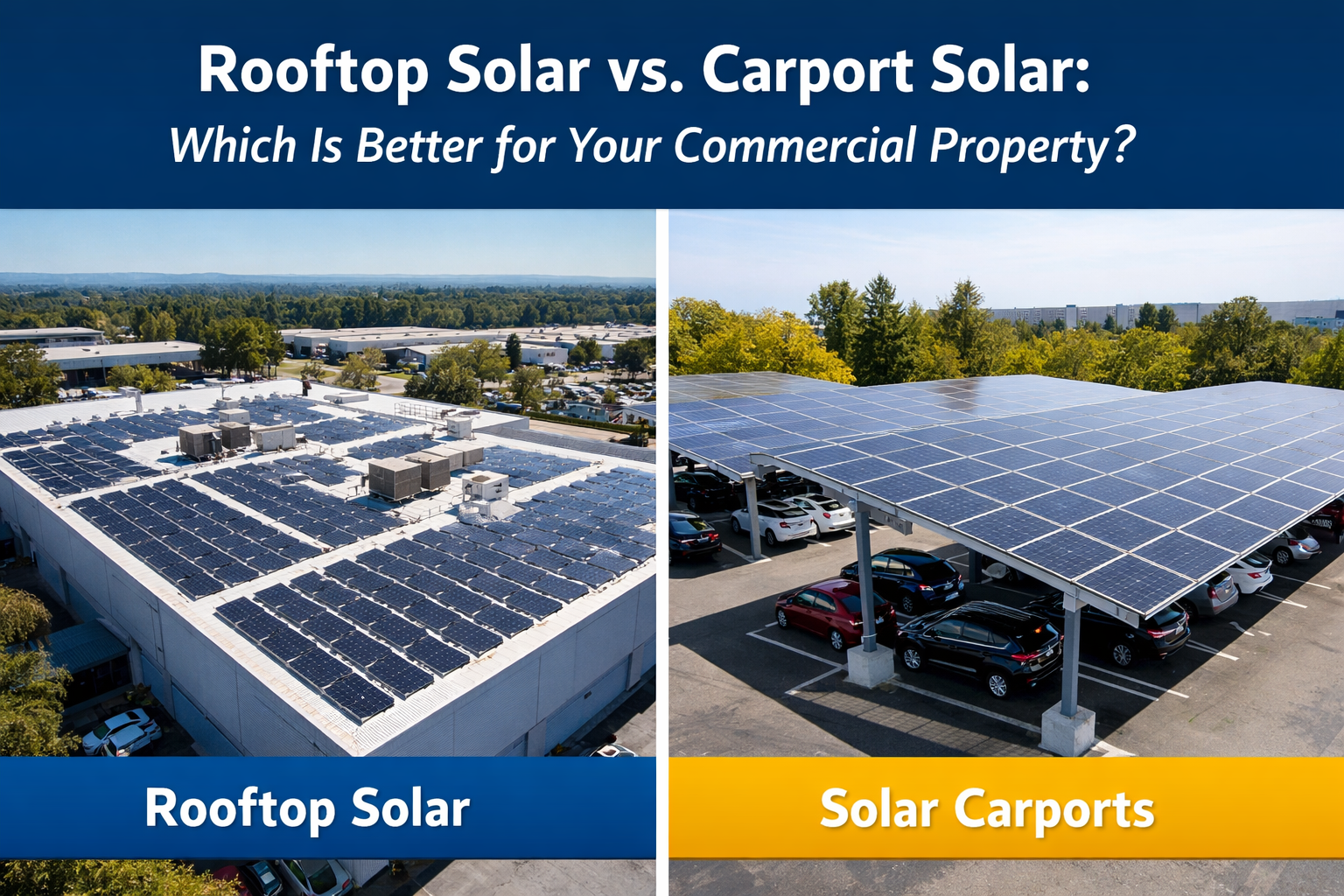
When a business starts exploring solar, one of the first questions is whether rooftop solar or solar carports make more sense for the property. The answer depends on much more than just open space. A successful commercial solar project begins with understanding the building, the parking layout, the electrical infrastructure, and the long-term goals of the customer. Both options can be excellent, but the right choice comes down to the details of the site.
Rooftop solar is often the more cost-effective starting point because it uses existing building space that would otherwise go unused. If the roof has good sun exposure, minimal obstructions, and sufficient structural capacity, rooftop solar can be a very efficient solution. It often allows businesses to reduce energy costs without adding major ground-up site construction. For many properties, this makes rooftop solar the simplest and fastest path forward.
Solar carports usually require a higher upfront investment because they involve structural steel, foundations, and more extensive construction work. However, they can offer added value that goes beyond energy production alone. Carports provide shaded parking, improve the appearance of the property, and preserve valuable roof space for future equipment or renovations. In some cases, they may also be the better solution when rooftops are limited by age, layout, structural issues, or rooftop equipment.
There is no one-size-fits-all answer. Some commercial sites are ideal for rooftop solar, while others are better suited for carport structures. In many cases, the strongest solution is a combination of both, using available roof areas first and expanding into parking areas when additional production is needed. The best design approach is always based on real site conditions, not assumptions made before the property is properly evaluated.
At the end of the day, choosing between rooftop solar and carport solar is about balancing cost, constructability, aesthetics, and long-term value. A well-designed system should match the property’s physical conditions and the customer’s operational goals. When the project is evaluated correctly from the start, businesses can make a much smarter investment and avoid costly design changes later.